City pays tribute to former Lord Mayor
Posted: January 10, 2016 Filed under: City Council, Leicester, Leicester City FC, Leicester Tigers, Leicestershire, Politics, Sport | Tags: Colin Hall, Keith Vaz, Labour Party, Rushey Mead, Sikhism Comments Off on City pays tribute to former Lord Mayor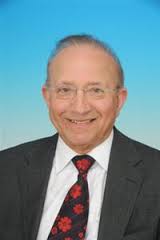
Former City Councillor Culdipp Bhatti (pictured above), who represented the Rushey Mead ward for 32 years until his retirement last May, has passed away at the age of 80.
A long-serving member of Leicester East Constituency Labour Party, the Punjab-born Mr Bhatti achieved distinction as Leicester’s first ever Sikh Lord Mayor, a role he held from May 1996 to May 1997.
His year of office was particularly notable for the number of trophies won by local sports teams. Leicester City FC, Leicester Tigers and Leicestershire County Cricket Club all won national trophies during that period and were duly honoured by the Lord Mayor at the Town Hall.
In 2005, the then Councillor Bhatti, a teacher by profession, was awarded an MBE by the Queen in her Birthday Honours List in recognition of his services to Children in Leicester.
Friends and former colleagues of Mr Bhatti have spoken of their sadness and sorrow at his passing.
Local MP Keith Vaz described him as a “man of honour, integrity and dedication”, while city mayor Sir Peter Soulsby praised his “passion and loyalty”.
Leicester Voice editor, Colin Hall, who served alongside Mr Bhatti as a Councillor for 13 years, also paid warm and and glowing respects.
Mr Hall, who himself served as Lord Mayor during the 2010-11 municipal year, said, “Culdipp made a phenomenal contribution, over many decades, to the community, the City Council and the Labour Party. His record speaks for itself.
“As one of the first councillors of Asian origin in this city, he blazed a trail which others later followed. He provided support and inspiration to so many of us. We could not have achieved what we did without the help that he gave us.
“During his long and distinguished public office, Culdipp received a wide range of honours, all of which he thoroughly deserved.
“But none meant more to him than the tribute paid by his fellow residents of Rushey Mead, by electing him to represent them on nine successive occasions.
“That’s an incredible achievement – which Culdipp was rightly very proud of. It tells us everything about the esteem in which the community held him.
“My thoughts are with his widow and his family at this distressing time.”
Mr Bhatti’s funeral service will be held at Gilroes Crematorium, Groby Road, Leicester, LE3 9QG on Monday 11th January 2016 at 12.15 noon followed by a religious ceremony at the Guru Tegh Bahadur Gurdwara Sikh Temple, 106 East Park Road, Leicester LE5 4QB at 13.30pm.
Donations in Mr Bhatti’s memory can be made to ‘Oncology, Ward 40, Leicester Royal Infirmary’.
Tigers pay the price of independence
Posted: October 10, 2012 Filed under: Leicester, Leicester Tigers | Tags: Rugby World Cup, sports Comments Off on Tigers pay the price of independence
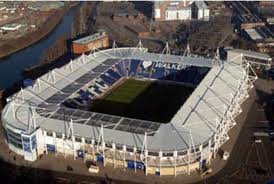
Filbert Way – a bigger (and better?) venue for Rugby World Cup ties
The Caterpillar Stand at Leicester Tigers’ Welford Road ground is one of the city’s most imposing landmarks.
Built in 2009, it is by some distance the biggest at any purpose-built English rugby venue, often hosting over 10000 spectators on match days. It also serves as a monument to the club’s stature and aspirations.
However one of the club’s most cherished aims – to host future Rugby World Cup matches – appears to have been denied.
Although the next tournament – to be staged in 2015 – will be held in England and Wales, its organisers announced this week that Welford Road will not be included on the list of possible venues.
This decision came as a bitter disappointment to a club that has twice hosted World Cup games in the past, in 1991 and 1999.
But the establishment of the nearby King Power Stadium as a successful international sporting venue during the past decade has given the authorities another option.
In the past twenty years, the public profile of rugby union has risen substantially, helped by England’s 2003 World Cup triumph.
The authorities are seeking, understandably, to ensure that the growth of the sport is sustained. Widening the fanbase and maximising revenues are an important part of their strategy to enable this.
So it is no real surprise that a larger stadium, boasting over 32000 seats (all with an uninterrupted view), together with modern media, corporate and hospitality facilities, has been preferred.
Although the majesty, splendour and prestige of the Caterpillar Stand cannot be denied, they do present a very stark contrast to the main stand on the other side of the ground.
This structure, ageing, rust-ridden and decrepit, may still be fondly regarded by those who have gathered within it for decades.
But it can no longer be described as fit for the purpose of hosting the planet’s premier rugby tournament. The row of portakabins that currently adjoin it only enhance the air of decay.
Would this really be an image that the sport or the city would wish to present to the rest of the world?
The redevelopment of the stadium, of which the Caterpillar Stand was the first phase, should now have been close to completion. But economic pressures have forced the club to delay plans, and the effects of such uncertainty are now being felt.
There may also be a sense of chickens coming home to roost. Eight years ago, Tigers held talks with Leicester City on becoming joint-tenants at Filbert Way, with a view to eventual purchase of the stadium.
However, these discussions fizzled out due to wrangles over primacy of tenure, and associated sectarian tensions between elements of the clubs’ respective fan bases.
So the clubs became competitors, rather than co-operators, and in this particular battle, there was only ever going to be one winner.
When the wailing subsides, it is to be hoped that the clubs will work together, along with the City Council to secure the city’s role in the World Cup.
We cannot allow continued sniping to place the interests of the city at risk.
 Leicester Voice