These city investors deserve a return
Posted: February 25, 2013 Filed under: Culture, Leicester | Tags: City Centre, nightlife Comments Off on These city investors deserve a returnYards away from one of the most famous car parks in the world, another of Leicester’s treasures has been unearthed.
But while the recently-excavated remains of King Richard III provided an eminent example of the city’s prestigious past, the Bankers Club, in Friar Lane, is seeking to attract modern-day movers and shakers.
The venue’s name pays due homage to its previous use as the home of the Phoenix Assurance Company, who vacated the site some years ago.
The club aims to provide a discreet, secure and stylish ambience which will enchant and entice a select group of followers. With a prime location in the heart of Leicester’s professional quarter, it is already attracting considerable attention from representatives of the city’s top financial, property and law companies.
Judging by the favourable response that was evident at the corporate launch on Friday 22 February, it seems set to become a firm favourite in the area.
During the launch, a visibly diverse audience of men and women, from across Leicester’s age ranges and racial groupings, enjoyed an exquisite range of canapes, washed down with complimentary champagne.
Many of the guests present indicated their intention to promote the delights on offer within the club among the local community, especially as corporate membership is FREE for the first twelve months.
The luxurious facilities provide substantial opportunites for both formal and informal networking.
Offering both light lunchtime nibbles, and convivial ground-floor and basement lounge areas for evening refreshment, the Bankers Club provides a uniquely sophisticated, elegant and entertaining environment, as well as a discretion and commitment to personal security which elevates it above other, more established parts of Leicester’s local night scene.
The club’s team of highly-experienced, fully-trained bar and security staff are dedicated to delivering the highest standard of customer service. For select groups, an individual waiter service can be provided to ensure that instant attention can be given to premium customers.
In addition, further exclusivity can be offered on request, with smaller dining areas accessible for reservation to those members seeking greater privacy or intimacy.
With a wide range of wines, spirits, champagnes and cocktails, plus several premium European beers available on draught, the venue seeks to meet the needs of all types of discerning drinker.
Members seeking to entertain those particularly-important guests, or wishing to enjoy the occasional self-indulgence, can place an order for their own favourite brand, and store it within their personal, individual vault.
In conversation with the club’s owners, their determination to succeed with this venture was evident in every word they spoke. They left no doubt about their desire to oversee a venue which is renowned throughout the city, county and region, as well as contributing to Leicester’s continuing expansion and regeneration. On visiting the club, their blend of ambition, enthusiasm and optimism was reflected in the atmosphere within it.
The charms of this venue are certain to leave many of its visitors wanting more. It’s certainly more dignified than some of the other erstwhile resting-places in the immediate vicinity..
The Bankers Club is at 10 Friar Lane, Leicester LE1 5RA. To enquire about membership, call 0116 262 1932 or email thebankersclub@gmail.com. Its website will be launched soon.
More sporting glory for Leicester in 2013?
Posted: January 1, 2013 Filed under: Basketball, Cricket, Football, Hockey, Leicester, Leicestershire, Speedway, Sport | Tags: Leicester City FC, Leicester Hockey Club, Leicester Lions, Leicester Riders, Leicester Tigers, Leicestershire CCC Comments Off on More sporting glory for Leicester in 2013?For a city of around 300000 inhabitants, Leicester has often punched above its weight in sporting terms.
Indeed, the city has often taken great steps to promote and honour the teams and individuals who have contributed to such a rich sporting heritage. The sports statue near the Clock Tower is the most prominent example.
But as the new year dawns, what are the prospects of further honours for our local clubs?
The main focus will fall upon Leicester City, seeking to end the years of exile from the Premier League. Nigel Pearson’s side is currently well-placed to earn a playoff slot at least, but will be hoping for more.
A return to the top flight football would offer the global profile the club’s Thai and Chinese owners so keenly crave, as well as ensuring financial stability for years to come, with TV revenues set to rise sharply next season for Premier clubs.
By stark contrast, a further season of failure would incur yet another tour of some of English football’s less salubrious venues, with continuing attendant heavy losses threatening City’s long-term viability.
With these factors in mind, the 2013 playoffs will be particularly intense and frenetic, requiring considerable reserves of character, resilience and mental strength among players and management alike.
Unfortunately these are precisely the qualities which this City side have too often lacked in recent times. It is far from certain whether it would be able to withstand the burden of expectation to overcome this challenge.
On the other side of Aylestone Road, similar concerns arise regarding Leicester Tigers. Although the side secured victory in the LV Cup last year, the Premiership and Heineken Cup will again assume higher priority in the coming months.
At present, however, success on either front appears unlikely, with the side’s form away from Welford Road being more fallible than players, management and supporters would wish.
While is possible that Tigers may yet reach a ninth consecutive Premiership final, few would be confident in its ability to defeat whichever London/Home Counties franchise emerges this time around to command the allegiances of the majority of the Twickenham crowd.
A fairytale script would demand that skipper Geordan Murphy caps a glittering career by lifting another title crown. But suspicions remain that the side is not the force it has been in seasons past.
Meanwhile, expectations are somewhat lower for Leicestershire County Cricket Club, as they prepare for the current season.
With new captain Ramnaresh Sarwan at the helm for four-day matches, the Foxes will hope to improve on last season’s 7th-place finish in the County Championship 2nd Division.
However, it is unlikely that the progress of the relatively young squad will be enough this time around to secure promotion. Instead, hopes will be directed, as in previous years, towards success in the T20 and 40-over competitions.
The club will also be anxious to see a drier and warmer summer to attract higher attendances and exploit the interest in the sport generated by another Ashes series.
It is in hockey and basketball that the city’s sporting hopes are most likely to bear fruit. The Leicester Hockey Club are well set to defend their Championship crown, currently lying 2nd in the Premier League, while Rob Paternostro has built the strongest Riders team for a decade, and will hope to secure at least one trophy during the current season.
In addition, the Leicester Lions speedway team will be serious contenders for the Premier League title in their 3rd season at Beaumont Park, having risen from a wooden spoon place in 2011 to the playoffs last year.
The fortunes of all these sides, and others flying the flag for city and county, will continue to be keenly followed by sports fans. We wish them every possible success during the next 12 months and beyond.
Why Leicester should welcome the Leveson Report
Posted: December 1, 2012 Filed under: Leicester, Leicestershire, Media | Tags: Leveson, McCanns Comments Off on Why Leicester should welcome the Leveson Report
Leveson – report looks for reform not revolution
Local heart surgeon Gerry McCann launched a scathing attack on the Prime Minister yesterday – and rightly so.
David Cameron chose to reject the proposal for an independent regulator of the press – a key recommendation of the Leveson Report.
In doing so, Cameron demonstrated a clear contempt both for the inquiry process and for the vast majority of those that submitted evidence to it.
So it was hardly a surprise that Dr McCann, along with JK Rowling, Hugh Grant and representatives of the Hillsborough Justice Campaign, have been highly critical of him.
Dr McCann and his wife have suffered incredible grief in the five and a half years since their daughter went missing.
But when they looked to the press for help and support, too often they found intrusion and on occasion, open hostility instead.
They gave evidence to Leveson in order to serve the wider public interest and it is vital that their evidence is given due recognition and respect.
Leveson concluded that a whole range of practices – from phone hacking to covert surveillance, to harassment, to other wrongful behaviour – were widespread, and all in breach of the code of conduct by which the press was supposed to abide.
While few, if any, of these practices were followed at local level, their influence on editors and reporters, some of whom aspired to progress to national posts, was clear.
The industry regularly tested, and may occasionally even have breached, legal boundaries in pursuit of stories designed to undermine key public organisations and individuals associated with them.
As with its national counterpart, it looked to make the news, rather than merely report on it.
So what safeguards can be put in place to stop these malpractices from recurring in future?
Leveson’s recommendations may not have gone as far as some media critics may have wished. But others, including Labour and the Liberal Democrats, have accepted them as measured and essential. Opinion polls have shown substantial majorities in favour of increased regulation, in spite of determined and widespread resistance within the industry itself.
Some of the press’s worst lapses during the past thirty years have occurred when papers have colluded with the government of the day, instead of exercising their duty to challenge it.
The Hillsborough disaster was one notable example, as were the wars in Iraq and Afghanistan and, more recently, coverage of the conflict between Israel and the Palestinians.
The industry has made several assurances about its behaviour before. None of these have been honoured. All too often, “self-regulation” has proved to mean “no regulation”. That has to change.
The House of Commons indicated a willingness to defy David Cameron in July 2011, when he appeared to misread the public mood on the need for a public inquiry. He was eventually persuaded to change his mind and appoint Leveson.
Now the time has come for the House to demonstrate the same independence again and ensure that the Leveson recommendations are implemented in full.
Only then will Dr McCann, other victims of press intrusion and – crucially – the public at large, be satisfied that justice has been served.
Why the local PCC election matters
Posted: November 12, 2012 Filed under: Crime, Leicester, Leicestershire | Tags: Elections, PCC Comments Off on Why the local PCC election mattersYou can decide who will be in charge at Leicestershire Police HQ
On Thursday, over 700000 residents of Leicester, Leicestershire and Rutland will have the opportunity to cast their votes for the area’s first-ever directly elected police and crime commissioner (PCC).
However, local surveys suggest that fewer than one eligible voter in five will bother to take part. Campaigning has been very low-key and public awareness of the election, and the candidates standing, is somewhat limited.
The performances of PCCs have hardly been an unqualified success in the USA and there was minimal public demand for them to be introduced here.
But in view their forthcoming statutory presence as a consequence of this Tory-led government, we should act to limit, and maybe even prevent, the damage they could cause to the integrity, reputation and effectiveness of the force.
Some areas of the media, who might usually be expected to know better, have urged a boycott of the election. But opting out of the democratic process is unhelpful, and deeply self-indulgent, especially when our taxes are funding troops to fight – and occasionally die – in its defence.
The outcome of the election is of considerable importance to the local constabulary’s workforce of 1300 staff. The three local candidates have expressed radically differing views on how the budget, currently running at an annual figure of around £170 million, should be allocated.
During the hustings that have taken place to date, Tory candidate Sir Clive Loader has shown no inclination to distance himself from his party’s avowed agenda of widespread cuts and privatisation. Meanwhile, although rival Suleman Nagdi is a respected and admired community figure, he has shown little ability to attract support outside the faith group to which he has devoted so much of his previous work.
In contrast, Labour’s Sarah Russell, currently an assistant mayor at Leicester City Council, has gained significant experience in managing a large public organisation, serving in the last three administrations during challenging and often turbulent times.
Leicester Voice therefore has no hesitation in recommending Cllr Russell as the best of the three candidates. She is the one most likely to promote stability within the force – and its senior management in particular – thus protecting the quality of service it currently provides to the community.
Unlike many local and national politicians, Cllr Russell has regularly shown a willingness to engage with the people she serves instead of attempting to dictate to them. In addition, the perspective she would bring as a parent and inner-city resident, together with her specialist knowledge in chairing the inter-agency Safer Leicester Partnership, would play a significant role in determining her (and therefore the force’s) priorities in office.
The various high-level police investigations that are currently ongoing, into such issues as child abuse, phone-hacking, and the 1989 Hillsborough disaster, highlight only too clearly the need for the police to be protected from government interference.
The election of Cllr Russell as commissioner is the best way of ensuring that this happens.
In addition, a heavy national defeat for the coalition parties will also send an effective message of widespread public discontent with the government’s performance in general and this policy in particular.
Tigers pay the price of independence
Posted: October 10, 2012 Filed under: Leicester, Leicester Tigers | Tags: Rugby World Cup, sports Comments Off on Tigers pay the price of independence
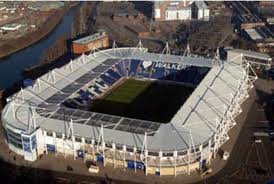
Filbert Way – a bigger (and better?) venue for Rugby World Cup ties
The Caterpillar Stand at Leicester Tigers’ Welford Road ground is one of the city’s most imposing landmarks.
Built in 2009, it is by some distance the biggest at any purpose-built English rugby venue, often hosting over 10000 spectators on match days. It also serves as a monument to the club’s stature and aspirations.
However one of the club’s most cherished aims – to host future Rugby World Cup matches – appears to have been denied.
Although the next tournament – to be staged in 2015 – will be held in England and Wales, its organisers announced this week that Welford Road will not be included on the list of possible venues.
This decision came as a bitter disappointment to a club that has twice hosted World Cup games in the past, in 1991 and 1999.
But the establishment of the nearby King Power Stadium as a successful international sporting venue during the past decade has given the authorities another option.
In the past twenty years, the public profile of rugby union has risen substantially, helped by England’s 2003 World Cup triumph.
The authorities are seeking, understandably, to ensure that the growth of the sport is sustained. Widening the fanbase and maximising revenues are an important part of their strategy to enable this.
So it is no real surprise that a larger stadium, boasting over 32000 seats (all with an uninterrupted view), together with modern media, corporate and hospitality facilities, has been preferred.
Although the majesty, splendour and prestige of the Caterpillar Stand cannot be denied, they do present a very stark contrast to the main stand on the other side of the ground.
This structure, ageing, rust-ridden and decrepit, may still be fondly regarded by those who have gathered within it for decades.
But it can no longer be described as fit for the purpose of hosting the planet’s premier rugby tournament. The row of portakabins that currently adjoin it only enhance the air of decay.
Would this really be an image that the sport or the city would wish to present to the rest of the world?
The redevelopment of the stadium, of which the Caterpillar Stand was the first phase, should now have been close to completion. But economic pressures have forced the club to delay plans, and the effects of such uncertainty are now being felt.
There may also be a sense of chickens coming home to roost. Eight years ago, Tigers held talks with Leicester City on becoming joint-tenants at Filbert Way, with a view to eventual purchase of the stadium.
However, these discussions fizzled out due to wrangles over primacy of tenure, and associated sectarian tensions between elements of the clubs’ respective fan bases.
So the clubs became competitors, rather than co-operators, and in this particular battle, there was only ever going to be one winner.
When the wailing subsides, it is to be hoped that the clubs will work together, along with the City Council to secure the city’s role in the World Cup.
We cannot allow continued sniping to place the interests of the city at risk.
Why Keeping Quiet is a must-read for all-sports fans
Posted: July 7, 2012 Filed under: Cricket, Leicester | Tags: Book reviews Comments Off on Why Keeping Quiet is a must-read for all-sports fans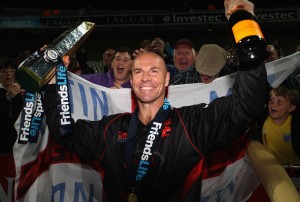
Paul Nixon (above), who enjoyed a distinguished career as a wicketkeeper and batsman (and occasional bowler) for Cumberland, Leicestershire, Kent, Delhi Giants and England, was no ordinary cricketer.
And his autobiography, Keeping Quiet, produced in association with Jon Colman, is no ordinary book.
As anyone with the fortune and privilege to witness “Nico” in action will confirm, there is a certain irony in the title.
Whenever he took to the field, before his playing career ended in 2011, he could never be described as a shy and retiring type. Indeed, he was one of the most vociferous English players of the modern era, perhaps of any era.
For one of the all-time cricket legends to pen a foreword to the book would be regarded as a great honour. The fact that TWO – Steve Waugh and Sir Vivian Richards – have chosen to do so is an indication of the respect with which Nixon is held throughout the world game.
Both of those giants recognised, from an early stage in their careers, the importance of mental fortitude at the highest levels and used this knowledge as a springboard for their achievements.
As Nixon acknowledges, he took somewhat longer to come to terms with such demands, but once doing so, he was successful in prolonging his career well beyond the standard retirement age.
The pride with which he recounts the 2006-07 tour of Australia, where he made his international debut (at the age of 35!) and helped to inspire England to a remarkable one-day tournament victory, shines vividly throughout every word of that particular account.
As a cricketer, Nixon was renowned for his passion, commitment and honesty. It is a delight to report that this book bears the same positive traits.
Throughout his career, he played hard and by his own admission, partied even harder.
This led to many adventures, many of which may have seemed amusing at the time (and perhaps even more so in hindsight), but also others which were downright scary.
He reaches the conclusion that a guardian angel is watching over him. The evidence presented to back this idea certainly gives pause for thought.
The author featured heavily in Leicestershire’s County Championship triumphs of 1996 and 1998, together with the three T20 titles in 2004, 2006 and 2011, and gives his role in those successes the attention it richly deserves.
Lesser authors may have focused on them exclusively. But Nixon also covers the darker sides of his two spells at Grace Road – from the divided dressing-room which blighted his early years in county cricket through to the bitter political in-fighting which prompted a recent player exodus and has weakened the county’s performance at four-day level for several seasons.
In addition, he tackles, in typically-direct style, some of the global challenges currently faced by the game. As a close friend of the late Hansie Cronje, and a leading player in the equally ill-fated Indian Cricket League, Nixon was already well-acquainted with the damage inflicted by match-fixing scandals. So it is little surprise that an attempt by an “acquaintance” offering a £5million bribe, to persuade him to rig a 2010 T20 game at Durham proved to be unsuccessful.
Many faced with such a massive temptation may well have succumbed. It is a tribute to Nixon’s character, evident in his report of this episode, that the question of him doing so never even arises.
Another disquieting note occurs when a snide tabloid comment by an ex-England colleague, concerning Nixon’s role in an alleged incident during the 2011 T20 final, was picked up by the England and Wales Cricket Board and led to an official letter of censure being sent to both player and county.
Nixon, who denies the incident even occurred, is rightly aggrieved at never being given the chance to present, let alone defend, his case at any official hearing. However the tale illustrates to a disturbing degree the craven subservience of the national cricketing powers-that-be to the demands of the media, and in particular, one (lately somewhat-discredited) area of it.
As throughout much of its history, Leicestershire are enduring some difficult times at present. But many fans will hope that Nixon’s service will continue for many years – not only as a coach and mentor to the present squad. In the long-term, Nixon is ideally suited for a community/club ambassador role, similar to that which Alan Birchenall has performed with such distinction for those Foxes on the other side of Aylestone Road.
He has been, over many years a credit to both his native Cumbria and his adopted city and county. Long may he continue to be so!
Keeping Quiet, published by The History Press, is now available at all quality bookshops and also via http://www.amazon.co.uk. An e-book version for Amazon Kindle is available at http://ow.ly/c4ZqC
Colin Hall’s first e-book, We Were The Quarry, will be published by LeicesterVoice in August 2012.
The fight for Glenfield must go on
Posted: July 5, 2012 Filed under: Health, Leicester | Tags: Glenfield Hospital Comments Off on The fight for Glenfield must go on
The plans to close the children’s heart unit at Glenfield Hospital are a sickening blow for staff, campaigners and the East Midlands alike.
Many parents openly wept when health bosses broke the news towards the end of a five-hour meeting, streamed online, in London.
Hundreds of children across the region, and parts of East Anglia, will now be expected to travel to Birmingham if the plans to close the unit are accepted by the government.
But grave doubts persist on whether the facilities there can be expanded quickly enough to cope with the increased volume of patients.
It is also particularly distressing to learn that the Bristol Children’s Unit, whose continuous and sustained failings during the 1990s prompted the original national clinical review, is being recommended for retention.
The closure, if implemented will have a severe impact on existing heart care for adults at Glenfield. The internationally-renowned Extra-Corporeal Membrane Oxygenation (ECMO) service, based at the hospital and credited with saving the lives of hundreds of children and adults, would be placed at immediate risk. In turn, such uncertainty will clearly undermine existing high standards of care, as highly-qualified staff with years, even decades, of service seek to move elsewhere.
Meanwhile other regions, who have also lost out under the review, have signalled their determination to continue with their struggle.
All five political groups at Leeds City Council have already indicated their intention to submit an appeal to Health Secretary Andrew Lansley against the plans to close the Children’s Heart Unit at Leeds General Infirmary.
Their immediate response, which has engaged, mobilised and united all sections of the community, has set an example which other authorities in Leicester, Leicestershire and the rest of the East Midlands would do well to follow.
There are legitimate questions to ask about the role of the University Hospitals of Leicester Trust, and whether recent uncertainties about its management and financial planning may have been a factor that counted against Glenfield.
However, now is not the time for detailed public recriminations. Instead, local councils and the Trust must hold urgent talks to consider a co-ordinated response and contemplate their next move in a saga which may yet still have some way left to run.
At present there are many questions, raised during the extensive public consultation process that took place during the review, which remain unanswered. Unless and until they are resolved to the satisfaction of concerned families – whose interests should remain the driving force behind any changes – the question of closing ANY children’s regional heart unit should not arise.
Furthermore, as the recent furores over the budget have shown, the government can be forced to change its mind if the political tide dictates this. With dozens of Tory MPs already indicating a willingness to defend the interests of their communities on this issue, there must be a significant doubt whether the recommendations can survive unscathed. This gives rise to the possibility that at least one of the units now under threat could be reprieved.
The campaign to save Glenfield must therefore continue, for the sake of current and future heart patients.
 Leicester Voice